Introduction: Why This Ford F-150 Recall Is Going Viral
The Ford F-150, America’s best-selling pickup truck, is once again in the spotlight—but this time for serious safety concerns. In 2026, Ford issued or expanded multiple safety recalls affecting the F-150 lineup in the United States, with estimates reaching nearly 1.4 million vehicles impacted in one of the largest recall waves in recent years.
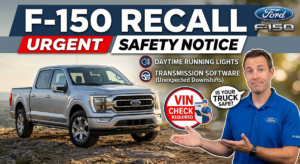
The issue has sparked widespread attention among drivers, dealerships, and regulators due to risks involving unexpected downshifting, electrical faults, and trailer module failures, all of which can increase crash risk while driving.
What Triggered the Ford F-150 Safety Recall?
The major recall actions in 2026 are linked to several critical safety-related defects:
1. Transmission Range Sensor Failure
A major recall affecting older F-150 models (2015–2017) involves a transmission range sensor communication failure. This can lead to:
- Sudden or unintended downshifts
- Temporary wheel lock-up
- Loss of vehicle control at highway speeds
Regulators confirmed that heat and vibration over time can damage electrical connections, triggering unsafe gear behavior (Reuters)
2. Integrated Trailer Module (ITRM) Software Issue
Another large recall involves 2021–2026 F-150 trucks, where a software glitch may cause:
- Loss of trailer brake function
- Failure of turn signals and rear lights
- Communication loss between trailer and truck
This issue is particularly dangerous while towing, increasing crash risk significantly (Reuters)
3. Instrument Panel and Electrical Failures
Some 2025–2026 F-150 vehicles also face:
- Blank or malfunctioning instrument clusters
- Missing warning indicators
- Startup display failures
This increases risk because drivers may not see critical alerts like speed warnings or engine faults (Kbb.com)
How Many Ford F-150s Are Affected?
Recent recall estimates show:
- 🔧 ~1.39 million F-150 trucks impacted in gearshift-related recall
- 🔧 Millions more affected across related Ford truck lines (Super Duty, Ranger, Expedition)
- 🔧 Multiple overlapping recalls across 2021–2026 model years
This makes it one of the largest ongoing safety recall clusters in the U.S. automotive market in 2026.
Safety Risks Explained (Why It Matters)
These issues are not minor software bugs—they can directly impact driving safety:
- Sudden downshifts → vehicle jerk or wheel slip
- Trailer brake failure → loss of towing control
- Electrical blackout → missing speed or warning info
- Signal loss → increased crash probability
Even Ford acknowledged that some incidents have already resulted in accidents and injuries, particularly in transmission-related cases.
What Ford Is Doing to Fix the Problem
Ford is addressing the recall through:
- 🔄 Over-the-air (OTA) software updates
- 🏪 Free dealer repairs
- 🔧 Powertrain control module recalibration
- 📩 Owner notification letters across affected VINs
Most fixes are software-based, meaning many owners can resolve issues without major mechanical replacements.
What Ford F-150 Owners Should Do Now
If you own a Ford F-150 in the U.S., here’s what you should immediately check:
✔ Step 1: Check Your VIN
Visit Ford’s official recall portal and enter your VIN.
✔ Step 2: Look for Symptoms
Be alert for:
- Sudden gear changes
- Dashboard blackout
- Trailer warning messages
- Brake/light failure when towing
✔ Step 3: Schedule Service
If affected, book a free dealer appointment or apply OTA update if available.
Why Ford Is Facing So Many Recalls
Industry analysts point to:
- Increasing vehicle software complexity
- Heavy reliance on electronic control systems
- High production volume pressure
- Supply chain component variability
Ford has already faced a record level of recalls in recent years, pushing the company to improve quality control systems across factories.
Final Take: Should Buyers Be Worried?
Despite the recall wave, the Ford F-150 remains one of the most popular and capable trucks in the U.S. However, the 2026 recall situation highlights an important shift:
Modern trucks are now as much “software machines” as mechanical vehicles
Small coding or sensor errors can create large safety risks
For current owners, the key takeaway is simple: check your recall status immediately and apply fixes as soon as possible.