
The Northern Ireland Assembly is facing immense public scrutiny following a major revelation regarding taxpayer-funded perks at Parliament Buildings. In a swift response to growing political pressure and public outrage, Stormont Speaker Edwin Poots announced a total suspension and a complete policy overhaul of the electric vehicle (EV) charging infrastructure within the Stormont estate.
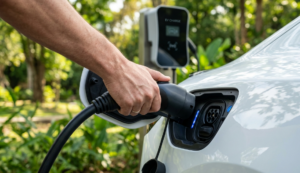
The controversy, which escalated dramatically in June 2026, centers around Members of the Legislative Assembly (MLAs) enjoying free electric vehicle charging while simultaneously claiming hefty public travel allowances.
Here is an in-depth breakdown of the Stormont EV scandal, Speaker Edwin Poots’ decisive intervention, and what this means for political transparency in Northern Ireland.
1. The Core of the Controversy: Free Juice on Taxpayer Money
The issue was thrust into the political spotlight after it emerged that MLAs had exclusive access to free EV charging points located in Stormont’s upper car park. While regular visitors and members of the public using chargers on the estate were required to pay standard tariffs, politicians were plugging in their vehicles entirely free of charge.
Making matters worse, critics pointed out a glaring double-standard regarding financial transparency:
-
The Dual Benefit: MLAs are already entitled to a generous Assembly Travel Allowance (ATA) to cover the costs of commuting, which can reach over £6,500 annually for some members.
-
The Conflict: Political watchdogs and rival politicians argued that claiming mileage expenses while simultaneously using free, taxpayer-funded electricity amounted to “double-dipping” or profiting from public funds.
Estimates suggested that the free upper car park charging points were costing Northern Ireland taxpayers roughly £350 per week. Coming right on the heels of a recent 27% pay rise for MLAs, the public perception was incredibly damaging, with critics labeling Stormont a “gravy train” for the political establishment.
2. Edwin Poots Steps In: Unanimous Assembly Commission Decision
Recognizing the severity of “legitimate public concerns,” Speaker Edwin Poots called an urgent cross-party meeting of the Assembly Commission. Following unanimous agreement, Poots addressed the Assembly during plenary proceedings to announce immediate, sweeping changes.
“It has been formally agreed that a new EV system will be introduced with payment being required for all EV charging points within the Assembly Commission’s responsibility on a consistent basis,” Speaker Edwin Poots stated to Members.
Key Actions Ordered by the Speaker:
-
Immediate Suspension: All EV chargers in Stormont’s upper car park have been shut down and will remain suspended until a paid system is fully operational.
-
Mandatory Reimbursement: Officials have been strictly instructed to engage with the specific MLAs who used the free chargers to arrange full financial reimbursement to the taxpayer.
-
Data Retention Overhaul: The new system will include a rigid review of how charger usage data is stored, fixing previous loopholes where data wasn’t properly metered or retained.
3. The History: How Did the Free Charging System Exist?
Defending the historical context of the setup, Edwin Poots noted that the free charging infrastructure dates back to 2015. At that time, electric vehicle adoption was extremely low, and governments across the UK routinely offered free workplace charging as an incentive to promote cleaner transport and reduce greenhouse gas emissions.
Over the years, the infrastructure expanded incrementally, with extra chargers added in 2018 and 2024, resulting in six points in the upper car park. However, while the wider EV market transitioned toward a paid commercial model—such as Stormont’s Lower East car park, which charges 32p per kWh via the Monta app—the upper car park remained outdated and free for politicians.
Poots clarified that the management of these chargers had been treated as “operational decisions” by staff and did not directly involve Commission members, noting that many MLAs were genuinely unaware of the specific billing arrangements.
4. Pressure Mounts Over Mileage Accountability
Despite the quick policy reversal, the political fallout continues. Independent and opposition voices are pushing for deeper transparency. Questions have been formally tabled demanding a breakdown of exactly how many charging cards were issued to MLAs, categorized by political party.
There are also demands to cross-reference EV booking data with travel expense sheets to ensure no rules were breached. Under the Nolan Principles of Public Life, politicians are strictly prohibited from profiting from public funds, making the reimbursement process highly sensitive.
Conclusion: A Much-Needed Step Toward Public Trust
The swift action taken by Edwin Poots and the Assembly Commission was vital to control a rapidly growing PR disaster. By eliminating the elite privilege of free charging and enforcing a pay-to-plug rule, Stormont is finally aligning its climate policies with commercial reality. Moving forward, detailed proposals for the new infrastructure will be brought to the Commission, ensuring that when it comes to the green transition, Northern Ireland’s politicians pay their fair share just like everyone else.